
Two whistle-blowing Shrinks
here to deep-throat the shit out of the truth
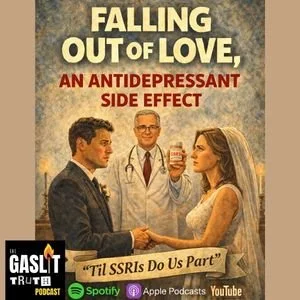
'Til SSRIs Do Us Part: Falling out of love, an antidepressant side effect
Let me say something that might make you uncomfortable: sometimes what gets labeled as “stress” or “falling out of love” isn’t that simple—and getting that wrong can cost you everything. In my recent conversation with Sabrina Lane from Loving Through the Storm, we talked about how easily a life can unravel from one seemingly reasonable decision. Her story started the way so many do: a therapist suggesting Lexapro at a specific dose to “take the edge off.” It sounded harmless, responsible even. But what followed was a cascade—medication changes, emotional blunting, and a slow shift in personality that eventually led to something devastating: her partner saying he felt nothing for her anymore. Not anger, not conflict—just nothing. That’s the moment that stops people in their tracks, and yet so often the explanation they’re given is, “sometimes people just fall out of love.” But what if that’s not the full picture?
Therapy Has a Boundary Problem — And It’s Not You
In my latest episode of The Gaslit Truth Podcast, I sat down with Aaron Gilbert, founder of Boston Evening Therapy Associates, to get real about boundaries in therapy. Therapy doesn’t fall apart because clients don’t care—it falls apart because therapists don’t hold the line. Missed sessions get waved off, late cancellations aren’t charged, and money conversations are avoided. That’s not kindness. That’s confusion. If I’m not clear about what the session is worth, what happens if you don’t show up, or how this process works, then what are you really committing to? Therapy isn’t just what happens in the hour—it’s whether the hour matters at all.
Addiction or Biologically Screwed? | The Gaslit Truth Podcast with Dr Teralyn Sell and Therapist Jenn Schmitz
I’m going to say something that a lot of people in the addiction world don’t want you to hear:
Addiction is not purely biological. And the insistence that it is? That’s gaslighting.
Yes, your brain is involved. But reducing addiction to a defective brain or a lifelong disease you’re powerless over isn’t just incomplete—it’s disempowering.

The Prescription That Killed Him Was Written by His Brother | The Gaslit Truth Podcast with Dr Teralyn Sell and Therapist Jenn Schmitz
Some conversations don’t leave you, and this was one of them. In this episode of The Gaslit Truth Podcast, Naomi shares the story of her husband, John—who was prescribed psychiatric medication by his own brother, a physician. What was meant to help ultimately caused harm.


Sorry, I'm Bipolar, Kanye West's Public Apology: legitimate or PR Stunt | The Gaslit Truth Podcast with Dr Teralyn Sell and Therapist Jenn Schmitz
Sorry, I'm Bipolar, Kanye West's Public Apology: legitimate or PR Stunt | The Gaslit Truth Podcast with Dr Teralyn Sell and Therapist Jenn Schmitz — JENN SCHMITZ, MS
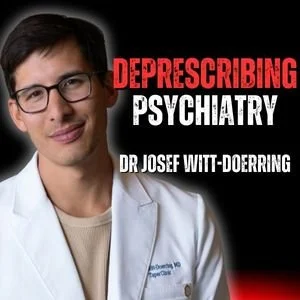
Dr Josef Witt Doerring on Deprescribing Psychiatry | The Gaslit Truth Podcast with Dr Teralyn Sell and Therapist Jenn Schmitz
Dr Josef Witt Doerring Deprescribing Psychiatry | Dr Teralyn Sell, Therapist Jenn Schmitz - The Gaslit Truth Podcast
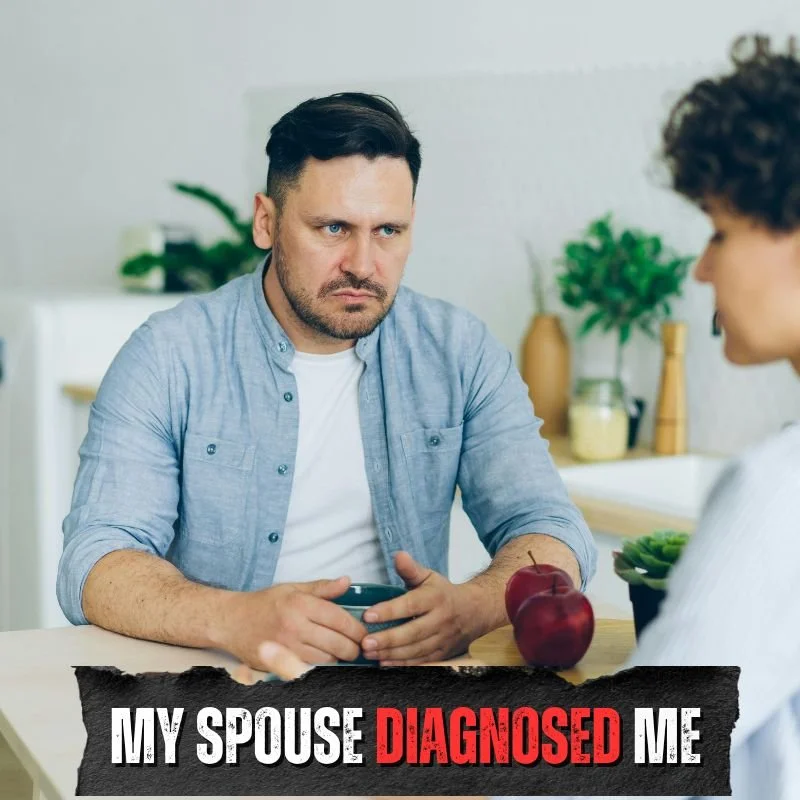
My Spouse Diagnosed Me with a Mental Health Problem | Dr Teralyn Sell and Therapist Jenn Schmitz
On this episode of The Gaslit Truth Podcast, Dr. Teralyn Sell and I tackled something I see ALL THE TIME in my therapy office:
Spouses diagnosing each other.
Let me say this clearly—stop pretending you’re a therapist. You’re not. And your partner is not your case study.
When you label them, push meds, send them podcasts, or demand they “do the work,” that’s not support. That’s control dressed up as concern. And it kills trust and intimacy.
So many partners come in convinced: If they’d just get treated, we’d be fine. But what if the symptoms improve and you’re still resentful? Still critical? The Gottman Institute has long warned us—contempt and chronic criticism predict divorce, not diagnoses.
And let’s talk about the medication mandate. Antidepressants aren’t a relationship repair strategy. In fact, they ruin more marriages than they help. They can blunt emotion, impact libido, and shift connection. That requires informed consent—not an ultimatum.
If you’ve caught yourself thinking, Fix yourself so I can be happy, I say this with love: that’s not intimacy.
What works better?
Own your side.
Make specific agreements.
Set clear boundaries.
Go to therapy for you—not to weaponize a label against your spouse.
Choose curiosity over control. It will take you much further and protect your marriage. Want to know more? Click below and listen now!

Therapists Are Trained Martyrs | The Gaslit Truth Podcast with Dr Teralyn Sell and Therapist Jenn Schmitz
Therapists...Trained Martyrs | Dr Teralyn Sell and Therapist Jenn Schmitz | The Gaslit Truth Podcast

Your Consent is Not Required with Rob Wipond
I’m Jenn, co-host of The Gaslit Truth Podcast—and this episode left me unsettled in all the right ways.
Dr. Teralyn Sell and I sat down with medical journalist Rob Wipond, author of Your Consent Is Not Required, to talk about something most people assume could never happen to them: losing their freedom in the name of “care.”
Rob shares how his father’s vulnerable moment after cancer surgery spiraled into months of involuntary psychiatric treatment—heavy drugs, ECT, and no meaningful consent. From there, we widen the lens: vague standards like “grave disability,” crisis-line escalations, and institutional habits that blur the line between safety and control.
We dig into the reality of 988 Suicide & Crisis Lifeline—how a call marketed as confidential support can escalate to police dispatch and hospitalization. Most people don’t realize conversations may be recorded, analyzed for “risk,” and used to justify intervention.
Inside hospitals, many patients report a compliance-first culture: take the meds, say the right things, get released. Refuse—and your stay may stretch on. Some have even said jail felt more predictable than indefinite psychiatric holds. That should make all of us pause.
This isn’t left vs. right. It’s about whether coercion, dressed up as compassion, actually helps—or quietly erodes trust and discourages people from seeking support when they need it most.
If we care about mental health and civil rights, we need real informed consent, transparency, and crisis options people can trust.
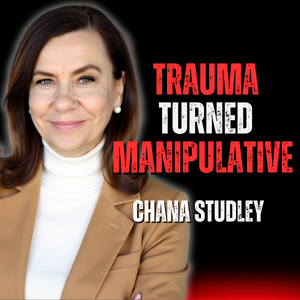
I Turned My Trauma Into Manipulation with Chana Studley, Dr Teralyn Sell, Therapist Jenn Schmitz
You are not broken—and this episode proves why.
On The Gaslit Truth Podcast, my co-host Dr. Teralyn Sell and I sat down with Chana Studley, a trauma survivor turned Hollywood award winner, for a conversation that cuts through a lot of the BS around trauma and healing. As a Therapist, I see this all the time: people handed a lifelong identity built around what happened to them, then told the only way out is to keep reliving it.
Chana lived that belief for years. Three assaults in her twenties left her with PTSD, chronic pain, and a nervous system locked in survival mode. But her turning point didn’t come from retelling the worst moments. It came from seeing how the mind’s “special effects” turn memory and prediction into present-tense danger—and how noticing safety allows the body to finally stand down.
We talked about the moment a mentor asked if she was ready to let go of her story—and why that felt almost offensive at first. We followed her into Hollywood creature shops, rebuilding dinosaurs before dawn, where imposter syndrome met a deeper insight: thought shapes experience, and two people can live the same event and carry wildly different weight.
We also dug into the mind-body connection and the Three Principles, how chronic pain can ease when the nervous system stops bracing 24/7, and why “rehashing to heal” often keeps people stuck. We covered how to catch the early whispers—irritability, urgency, lost humor—before they turn into flare-ups or shutdowns, and how to build an identity that isn’t fused to trauma or diagnosis.
Here’s the truth I stand by as a therapist and empower my clients to discover: healing isn’t about fixing yourself, excavating your past, or earning peace through suffering. You already have innate well-being - INNER AGENCY - and the moment you stop fighting your mind, it gets a whole lot easier to find.
The New USDA Food Pyramid: Nutrition Upgrade or Political Makeover? | The Gaslit Truth Podcast with Dr Teralyn Sell and Therapist Jenn Schmitz
On The Gaslit Truth Podcast, Dr. Teralyn Sell and Therapist Jenn Schmitz explore mental health by questioning the systems that shape it—from psychiatric norms and therapy culture to informed consent and what actually supports healing.
In this episode, Your Whistle-Blowing Shrinks take a hard look at the USDA Food Pyramid and the assumption that it reflects solid nutrition science. We walk through its real origins—wartime scarcity, surplus agriculture, and lobbying influence—and explain how weak evidence became accepted as “settled science.”
Jenn and Teralyn connect those decisions to today’s food standards in schools, daycares, and federally funded programs, where refined grains and juice still dominate menus, often undermining metabolic and mental health.
They then shift to what actually helps: prioritizing protein, whole foods, healthy fats, and gut health to support mood, energy, and brain function. To wrap up? An honest discussion about cost and access, offering realistic ways to make changes without perfectionism.
This episode is an invitation to question what we’ve been taught about nutrition—and why it matters so much for mental health.
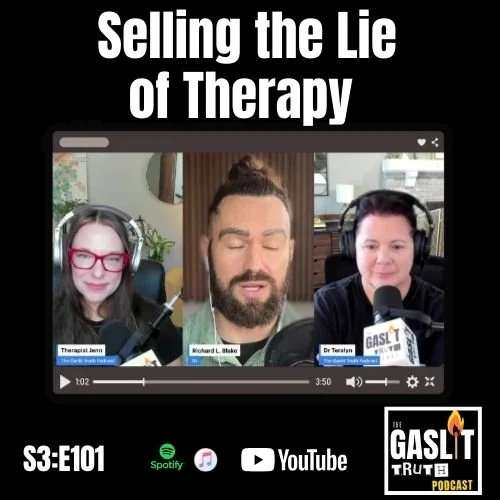
More Therapy Can Mean Worse Mental Health | The Gaslit Truth Podcast with Dr Richard Blake, Dr Teralyn Sell and Therapist Jenn Schmitz
Could modern mental health care be keeping us stuck?
On this episode of The Gaslit Truth Podcast, Dr. Teralyn Sell and Therapist Jenn Schmitz tackle a provocative question: despite more therapy, awareness, and treatment than ever, why are rates of anxiety, depression, and self-harm still rising?
Their guest, Dr. Richard L. Blake—psychologist, breathwork teacher, and lead author of the largest randomized controlled trial on conscious connected breathwork for anxiety—shares how traditional psychotherapy can sometimes hit limits. Together, they explore why alternative approaches like breathwork may offer a new, evidence-based path to real healing.
This episode dives into the paradox at the heart of modern mental health: we’re more informed and treated than ever, yet mental distress keeps climbing. Learn how shifting awareness, connecting with your body, and integrating breathwork could help break the cycle of chronic anxiety and depression.
SLEEP, The Billion Dollar Business | The Gaslit Truth Podcast with Dr Teralyn Sell and Therapist Jenn Schmitz
The Billion-Dollar Sleep Industry: What Really Works
The Gaslit Truth Podcast, hosted by Dr. Teralyn Sell and Therapist Jenn Schmitz, explores mental health, psychiatric medication withdrawal, therapy culture, and informed consent. In their live 100th episode, they take on the billion-dollar sleep industry—including melatonin, sleep aids, and prescription sleep drugs.
These Whistle-Blowing Shrinks break down why many popular sleep solutions focus on symptom management instead of addressing root causes. Rather than “buying sleep,” they explain how to restore natural rest by aligning hormones, respecting circadian and ultradian rhythms, and building routines your nervous system can trust.
The episode challenges common sleep myths, such as relying on nightly melatonin, believing five hours of sleep is enough, or trying to catch up on weekends. Listeners learn how cortisol and melatonin work together, and how modern habits—like screens, caffeine, and shift work—disrupt the body’s internal clock.
They also discuss growing concerns about long-term melatonin use, dependency risks, and the hidden costs of Z-drugs like Ambien and Lunesta.
🎧 Sleep: The Billion Dollar Business is available now. Tune in for clear, practical steps to restore deep, natural sleep—without the hype.
The Political Bias of Mental Healthcare | The Gaslit Truth Podcast with Ryan Rogers, Dr Teralyn Sell and Therapist Jenn Schmitz
The Gaslit Truth Podcast, hosted by Dr. Teralyn Sell and Therapist Jenn Schmitz, examines critical issues in mental health, psychiatric medication harm, therapy culture, informed consent, and brain-based healing. In this episode, they’re joined by Ryan Rogers, author and clinician, for a candid discussion on political bias in therapy and how “therapy as activism” has become normalized within the mental health field.
The conversation traces how graduate programs, professional culture, and social media have shifted training away from evidence-based modalities toward ideological messaging—often leaving clients without the skills needed for real recovery. The hosts and Rogers explore how politics in the therapy room can narrow access to care, inflate labels like trauma and gaslighting, and weaponize ethical “safety” language.
Ryan shares personal experiences of being gaslit in clinical training, where therapist neutrality was dismissed and advocacy was framed as treatment. In contrast, the episode highlights the realities of working with addiction, suicidality, and severe mental illness, emphasizing practical interventions such as motivational interviewing, ACT values work, behavioral activation, risk assessment, and careful deprescribing.
The episode also addresses how intersectionality hierarchies can encourage unequal treatment and how online therapy culture increasingly pushes clients to choose therapists based on political alignment rather than clinical skill. This conversation challenges the field to return to ethical, effective, and truly client-centered care.
Blind Tapering Vs. Informed Consent | The Gaslit Truth Podcast with Dr. Teralyn Sell & Therapist Jenn Schmitz
The Gaslit Truth Podcast is hosted by Dr. Teralyn Sell and Therapist Jenn Schmitz, where they examine mental health myths, psychiatric medication harm, and informed consent.
In this episode, Dr. Teralyn Sell and Therapist Jenn Schmitz explain blind tapering, the psychology of psychiatric medication withdrawal, and the role of therapy in tapering safely.
What if knowing your dose cut is coming makes you feel worse? We dig into blind tapering—masking dose reductions during psychiatric medication withdrawal—to explore how anticipation, nocebo, and hypervigilance can drive symptoms. Drawing on research from benzodiazepines, hypnotics, and even methadone programs, we unpack why combining taper protocols with behavioral therapy often improves short‑term discontinuation and reduces withdrawal complaints. More importantly, we translate those findings into practical strategies for antidepressants and antipsychotics, where data are thinner but psychology still matters.
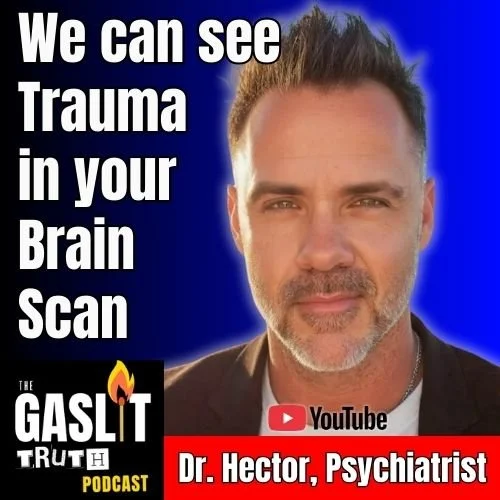
What If Psychiatry Meant Medicine For The Soul Again | The Gaslit Truth Podcast with Dr. Teralyn Sell & Therapist Jenn Schmitz
What If Psychiatry Meant Medicine for the Soul Again is a thought-provoking episode of The Gaslit Truth Podcast with Dr. Teralyn Sell and Therapist Jenn Schmitz that challenges the way modern psychiatry often dismisses lived experience. The conversation begins with an uncomfortable reality: gaslighting in mental health care is common—and it can cause people to doubt their own pain rather than heal it.
Psychiatrist Dr. Hector introduces a different approach he calls medicine for the soul, grounded in the White Butterfly ethos and inspired by Greek mythology. Using tools like SPECT imaging, he explains how recognizable brain patterns can reflect trauma and chronic stress without reducing individuals to diagnostic labels. The discussion explores how prolonged gaslighting and long-term stress can impact the brain as deeply as a single traumatic event—and why validation is often the first step toward real change.
The episode then turns practical, highlighting the importance of collaborative psychiatry, where psychiatrists, therapists, and medical providers work together to support deeper healing modalities like EMDR. Dr. Hector also discusses targeted supports such as GABA and tyrosine to regulate arousal and motivation without numbing emotions therapy needs to access.
At its core, this episode reframes psychiatry as relational, human, and integrative. By emphasizing connection as a clinical tool, shared humanity, and safety in the therapeutic relationship, The Gaslit Truth Podcast asks a vital question: what if psychiatry truly became medicine for the soul again?
Psych Meds Took My Son's Life: A Mother's Tribute to Tre | The Gaslit Truth Podcast with Dr. Teralyn Sell & Therapist Jenn Schmitz
Psych Meds Took My Son’s Life: A Mother’s Tribute to Tre is a deeply moving episode of The Gaslit Truth Podcast with Dr. Teralyn Sell and Therapist Jenn Schmitz. Sheila shares the story of her son Tre, a 25-year-old nurse and athlete whose health rapidly declined after a series of psychiatric medications were prescribed without adequate medical evaluation or safety planning.
Despite persistently low testosterone, Tre never received a full endocrine workup. Instead, treatment focused on antidepressants, mood stabilizers, and stimulants. Soon after starting psych meds, Tre experienced severe personality changes, agitation, and emotional instability. These symptoms were documented, including repeated reports of suicidal thoughts, yet critical safeguards were missing.
This episode highlights serious concerns around psych med risks, lack of informed consent, brief telehealth care, and the absence of coordinated patient safety planning. Sheila’s tribute to Tre is both a mother’s testimony and a call for accountability, proper medical investigation, and safer mental health care practices.
Mark Horowitz: My Own Withdrawal Rewrote the Science Behind Hyperbolic Tapering
What if the hardest part of coming off an antidepressant isn’t the first cut, but the last few milligrams? On this week’s episode of The Gaslit Truth Podcast, we sit down with Dr. Mark Horowitz, clinician, researcher, and someone who’s lived withdrawal himself.
He shares how his first carefully planned taper off Lexapro still collapsed into panic and derealization—and how that experience led him to hyperbolic tapering, survivingantidepressants.org, and ultimately co-authoring the Maudsley Deprescribing Guidelines.
We unpack why the brain reacts so strongly at low doses, why tiny reductions can make a big difference, and why standard advice often fails. We also talk about the everyday gaslighting many patients face when they report feeling worse and are told it’s “their disorder,” not a drug effect.
And here’s the unsettling part: most psychiatric drug studies last 4–8 weeks, yet millions stay on these medications for years. That gap leaves huge questions about long-term effects and withdrawal—questions Dr. Horowitz is helping bring to light.

Blowing the Lid off the Chemical Imbalance Myth with Dr Joanna Moncrieff
For decades, we’ve heard the same reassuring story: Depression is a chemical imbalance—and antidepressants fix it. But Professor Joanna Moncrieff says the evidence simply doesn’t back that up.
In our conversation, she breaks down why the serotonin myth exploded, what her 2022 review actually found, and why a drug-centered view of antidepressants changes the whole picture.
The shocker? Antidepressants aren’t “correcting” anything—they’re psychoactive drugs that alter mood and consciousness, sometimes helpful short term, often numbing.
Large studies have failed to link serotonin to depression, while the most consistent SSRI effect is… sexual side effects. Mood benefits? Inconsistent at best.
Marketing turned human suffering into a “brain defect,” overshadowing the real drivers: trauma, grief, values, and life events.
If you think you know what causes depression, this may shake everything loose.
"It's not a matter of training...it's not a matter of proof...it's about being stuck in an old paradigm, not being educated, not having the time or the interest or the proclivity."
Leslie Korn PhD, MPH, LMHC, ACS, FNTP, BCTMB